Tirath-Pata (Pilgrimage Map) of Shatrunjaya
1940s CE, Jain Temple, Gujranwala, Pakistan
Artefact Details
This tirath-pata or tirtha-pata depicts Shatrunjaya temples in Gujarat, India, one of the most prominent pilgrimage sites in Jainism. Tirathpatas are sacred objects used for bhava-yatra, or mental pilgrimage, enabling spiritual contemplation for devotees unable to embark on physical journeys to these sites. Measuring 6.5 x 8.5 ft, this incredibly rare map features both painted and relief work. It was originally housed in the Jain temple of Gujranwala and was transferred to the Lahore Museum sometime in the 1970s.
Tirath Pata (Pilgrimage Map) of Shatrunjaya (English)
Tirath Pata (Pilgrimage Map) of Shatrunjaya (Urdu)
The map's composition can be read vertically. The pilgrimage starts at the bottom of the panel near Palitana train station, where one ascends through the hills, moving through and to several shrines. The most prominent shrine, located in the top left section, is that of Adinath, also known as Rishabhdev, the 1st Jain Tirthankara. This large shrine is surrounded by a cluster of other smaller shrines and a diverse assemblage of pilgrims. This sequence visually mirrors the spiritual ascent of the pilgrim. The temples are depicted frontally or at slight oblique angles to maintain clarity and prominence. Pathways are drawn from a bird's~eye perspective, guiding the viewer visually through the pilgrimage route.
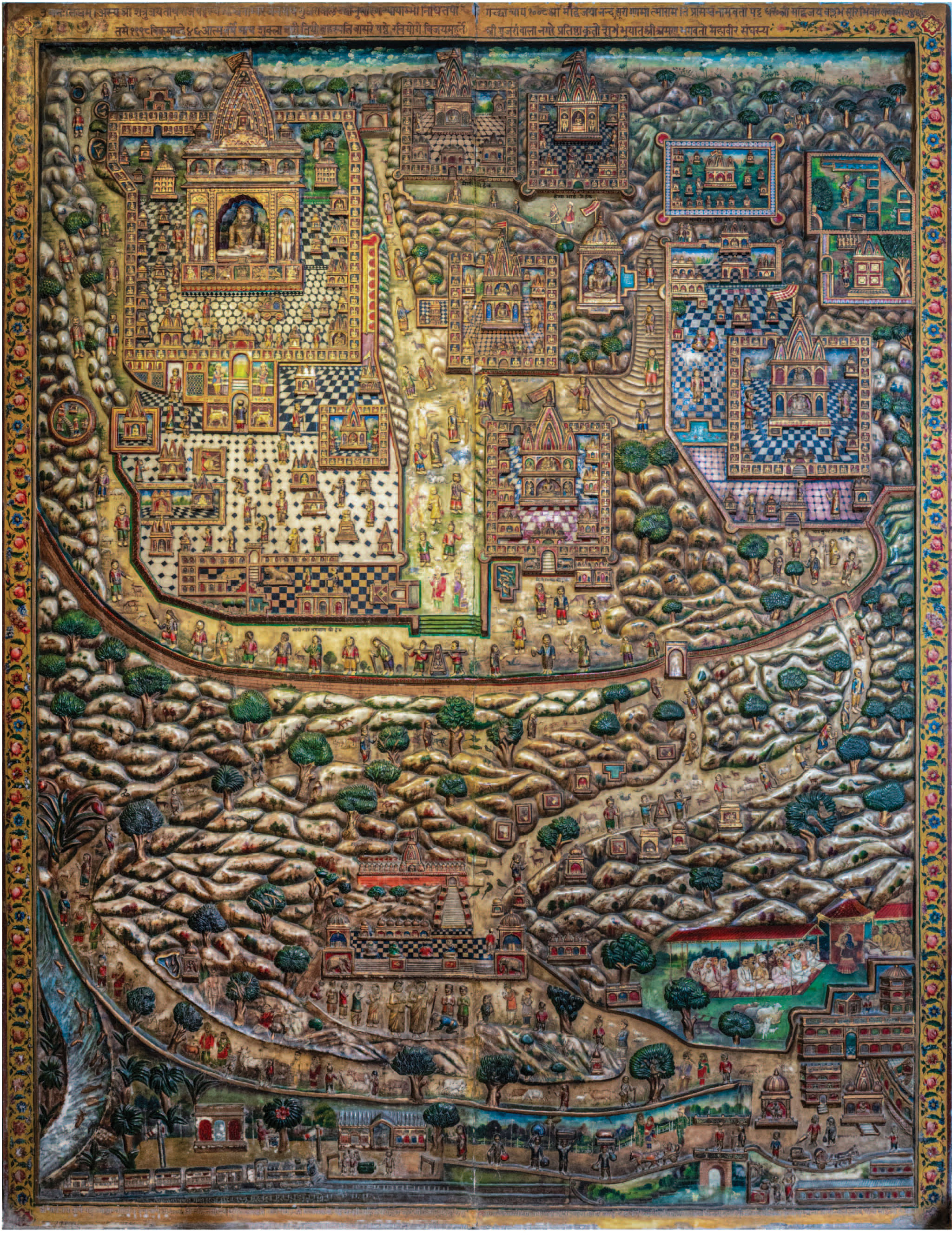
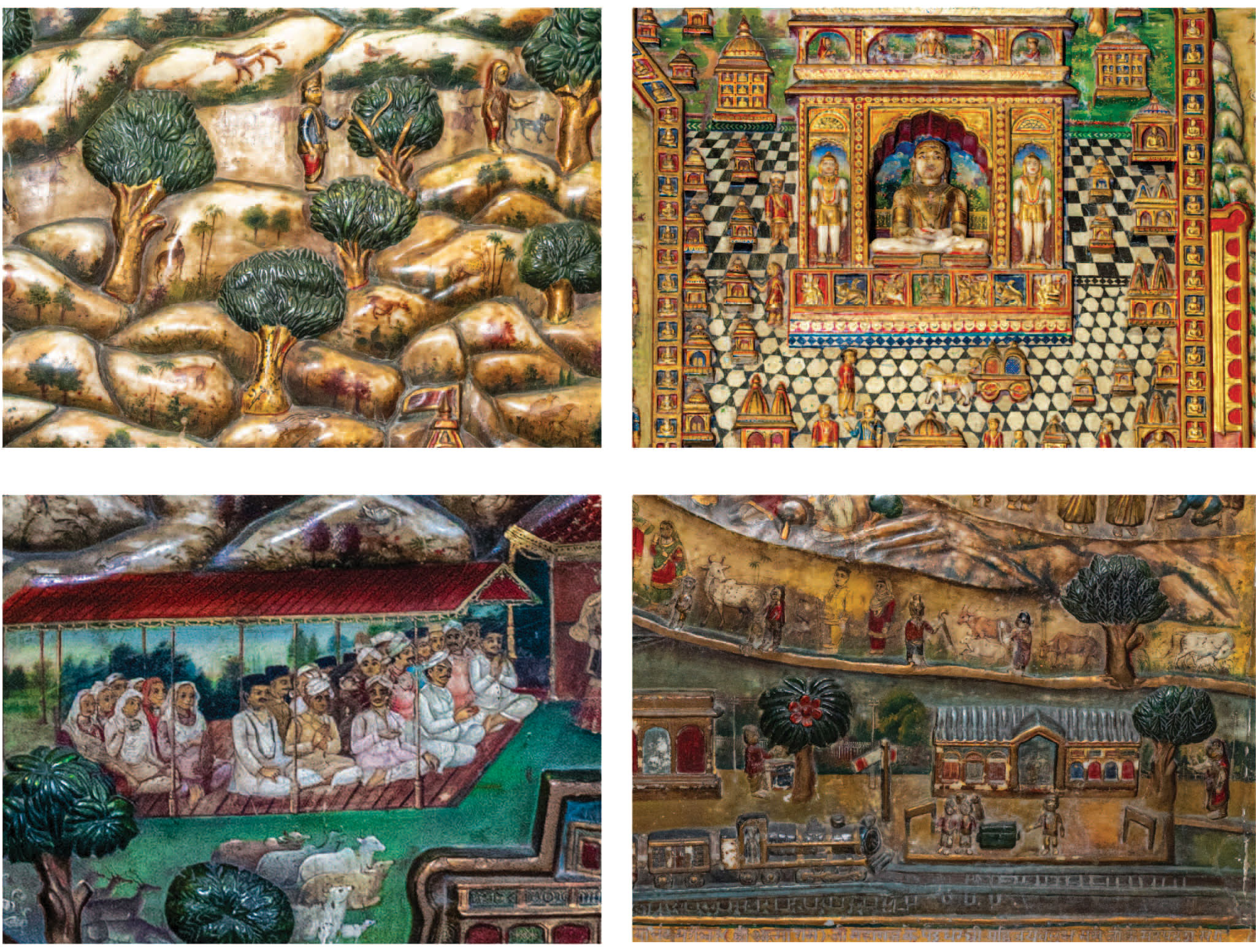
A wide array of flora and fauna populate the composition. Large banana and mango trees are prominent, along with small red bushes and uneven grass patches. Animal depictions include peacocks, snakes, monkeys, antelopes, cows, and cuckoos. Each painted creature is imbued with both religious and ecological symbolisms. In particular, the repetitive depiction of peacocks and snakes refers to Shatrunjaya Mahatmya, a sacred Jain text in which these natural enemies coexist peacefully on the sacred hill. The inclusion of cows and monkeys emphasises the integration of domestic and wild animals into the pilgrimage landscape, reflecting the Jain ideal of harmony between human and non~human life.
The map features a diverse range of human figures: porters near the train station, common pilgrims, royals in elaborate dresses, palanquin bearers transporting upper~class women, and guards in red, green, and blue uniforms. Ascetics and monks, particularly of the Shvetam~ bara tradition, are also included, highlighting the necessity of their presence in this sacred space. A very interesting feature of this tirathpata is a diksha ceremony being held near the train station. Here we see a woman taking an oath of renunciation in front of an assembly of Jain monks and ordinary people, who witness this auspicious moment with great reverence.
The tirath-pata has inscriptions identifying specific shrines and patrons in the Devanagari script. They are located on the top and bottom borders and embedded within the composition. For example, one inscription reads "Pandava ki dari" ("The House of Pandavas")-who, according to Jain belief attained liberation at Shatrunjaya. The inscription at the top dedicates the tirath-pata to Acharya Vijay Anand Suri and marks the completion date as 1941 (Vikrama Samvat, 1998).