Shantinatha-The 16th Jain Tirthankara
Date and findspot unknown
Artefact Details
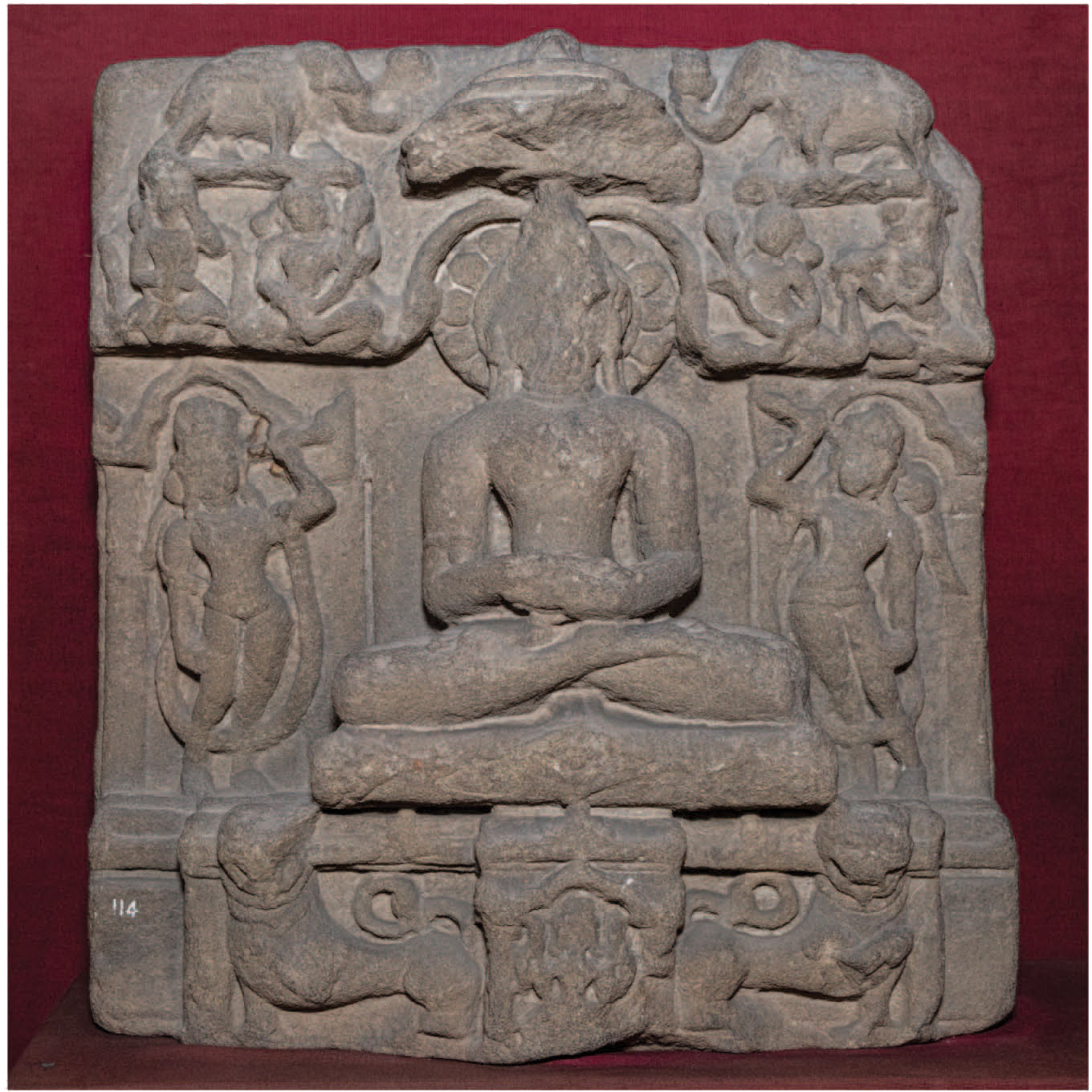
This damaged grey coarse stone sculpture possibly represents Shantinatha, the 16'h Jain Tirthankara. The eroded surface shows signs of accidental damage rather than vandalism, resulting in the destruction of all protruding features of the composition such as the parasol and the faces of all the figures. The Jina is identified through the jeweled cushion beneath him, which features a distinct lozenge or diamond-shaped motif in the centre. Shantinatha is usually shown with this jewelled cushion instead of his lakshana, or cognisance, the deer. In addition to this identifying element, a somewhat eroded carving in the centre of the lion throne appears to be the yakshi Nirvani, who is commonly seen positioned right under the seat of Shantinatha. Such attributes are consistent with known depictions of this Jina, including examples held in the Victoria & Albert Museum in London.
The composition features Shantinatha being lustrated by elephants, seated in padmasana, with hands in dhyana-mudra, on a singhasana, under an ornate parasol with a lotus halo behind his head. Flanked by chauri-bearers and mithuna couples, the Jina teachers elongated earlobes, prominent ushnisha, shrivatsa, and trivali. Shantinatha is especially revered in Jain tradition as a harbinger of peace. The name translates to shanti (peace) and natha (lord). His lakshana therefore, is a ruru (deer) which is an emblem of peace. The Jina is said to have revitalised the Jain faith during a time of spiritual decline and is therefore prayed to in order to avert calamities.