Padmaprabhu-The 6th Jain Tirthankara
1860s CE, Gujarat, India
Artefact Details
This white marble sculpture depicts Padmaprabhu, the 6th Tirthankara, identified by the lotus lakshana prominently carved on its pedestal. According to Shvetambara tradition, Padmaprabhu was born to King Ohara and Queen Sushima of Kausambi. It is said that upon his birth, he emitted a lotus~like pink glow, which is why he was named Padmapra~ bhu: from the words padma, meaning lotus, and prabhu, meaning radiance. According to another tradition, his mother, before his birth, wished to sleep upon a bed of red lotuses. This granted wish bestowed upon him his name, colour, and lakshana. Notable features of the sculpture include the ushnisha, and stylised curls on the tonsured head. The earlobes are elongated from years of donning heavy jewellery, symbolic of the life he renounced on the path to liberation.
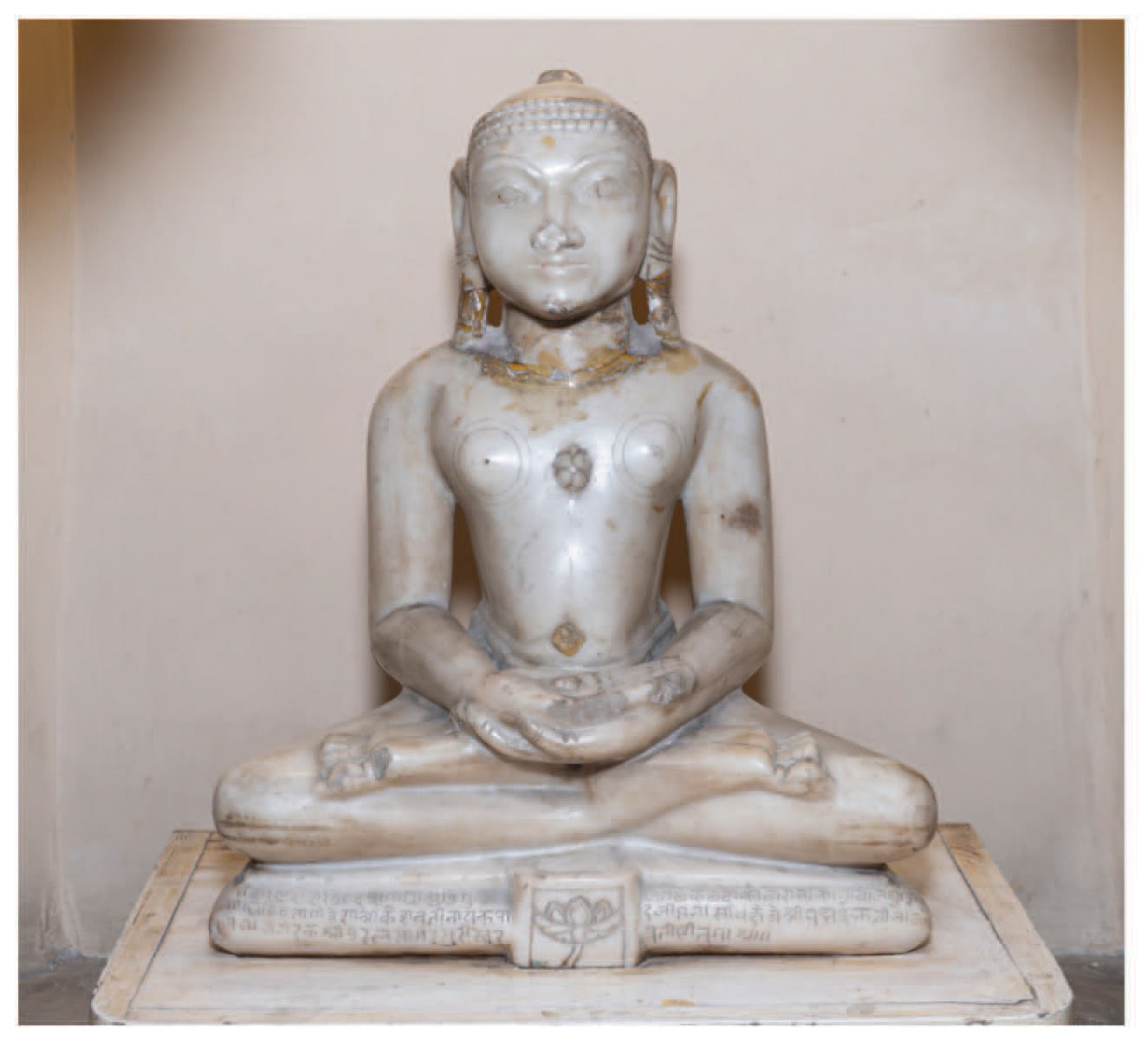
A three~line Devanagari inscription on the pedestal records the image's consecration in 1864 (VS 1921) by Shri Ratna Sagar Suri of the Achala~ gaccha order. The patron, Shah Keshavji Nayek, was a prominent Oswal Jain from Kothara, Kachchh, known for his philanthropic contributions, including temple construction and cultural endowments in Gujarat. The sculpture's original ritual function likely involved daily dravya-puja, a characteristic of the Achala Gaccha. This form of puja incorporates offerings such as sandalwood paste, incense, and fruit, in accordance with ashtaprakari puja (worship with eight objects).
Evidence of plaster restoration on the arms and torso indicate damage and subsequent conservation efforts. The presence of residual pigment suggests that the sculpture was actively used during rituals rather than serving solely as an object of visual contemplation.