Neminatha-The 22nd Jain Tirthankara
10th-11th century CE, Asthal Bahar, Rohtak, Haryana, India
Artefact Details
This intricately carved polished sandstone sculpture from Rohtak, Haryana, depicts the 22nd Tirthankara Neminatha, also known as Arishtanemi. He sits in the padmasana (lotus position), with hands in dhyana-mudra, the meditative pose marked by folded hands placed in the lap with the palms facing upwards. Dating to the 10th-11th centuries CE, this artefact is indicative of a flourishing culture of commissioningJain art in Northern India under the patronage of wealthy merchant communit~ ies and regional rulers. Originating from the site of Asthal Bahar, a major Jain centre in medieval Haryana, the sculpture was once part of a richly decorated temple and offers key insights into the devotional visual culture of the period.
Neminatha—The 22nd Jain Tirthankara (English)
Neminatha—The 22nd Jain Tirthankara (Urdu)
Neminatha is associated with the Yadava clan, making him a cousin of Krishna, the Hindu deity revered as Vishnu's eighth incarnation. Neminatha is especially venerated for his deep compassion. According to Jain hagiography, he renounced the world on his wedding day after hearing the cries of animals being slaughtered for post-nuptial feasting. Through this act of renunciation, he embodied the fundamental Jain tenet of ahimsa, or non-violence. He attained keval-gyan and achieved moksha on Mount Gimar in Gujarat, which remains an important pilgrimage site for Jains today.
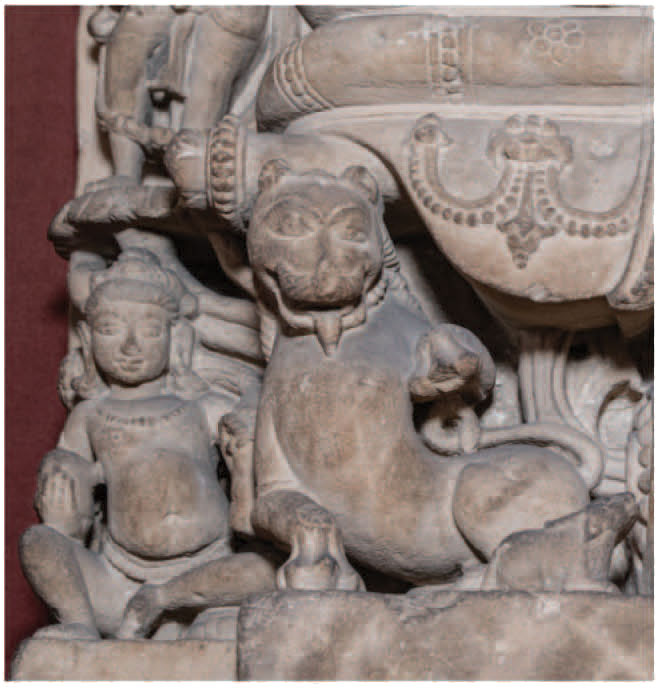
The sculpture is composed of several intricately carved sections with exuberant vegetal forms and delicately modelled figures. Starting from the bottom, we see Neminatha's singhasana throne with two addorsed lions and a chakra, or wheel of dharma ( used in both Jain and Buddhist iconography), in-between them. In front of these is a pair of bulls referencing Rishabhdev, the first Tirthankara, a regular feature linking Neminatha to the foundational figure of Jainism. Flanking the throne, on the right of the Jina, is Gomedha or Sharvanubhuti, the head of yakshas, who is seen wearing a conical headdress and holding a citron fruit, reflecting abundance and compassion. Opposite him, in the left corner, sits yakshi Ambika on her lion mount holding a child in her lap. Her iconography evokes blessings for fertility. Capable of both benevolence and caprice, yakshas and yakshis are guardian spirits of nature, wealth, and fertility, and ancient Indian texts depict them inhabiting forests, mountains, and watercourses. The presence of these deities highlights how Jain religious art incorporated popular devotional elements to cater to the worldly needs of lay followers.
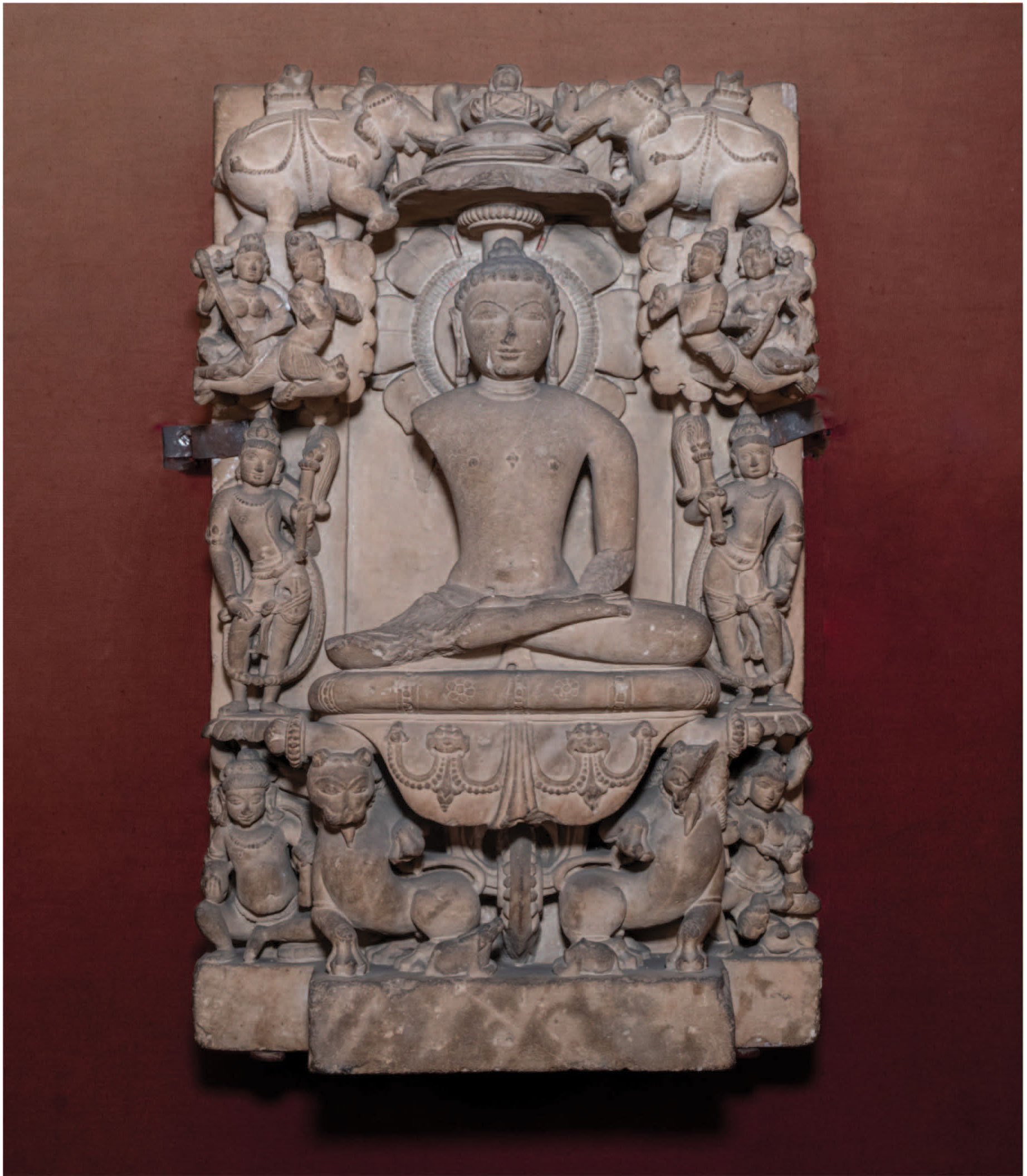
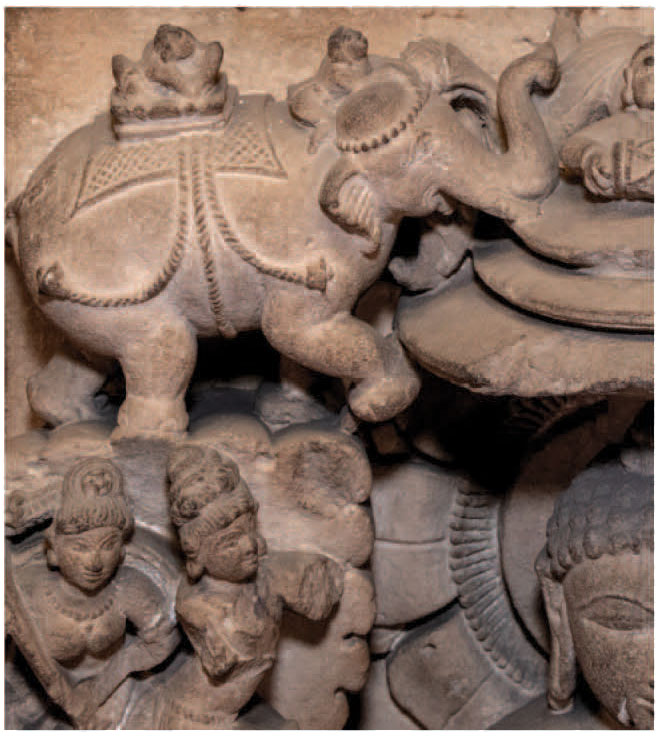
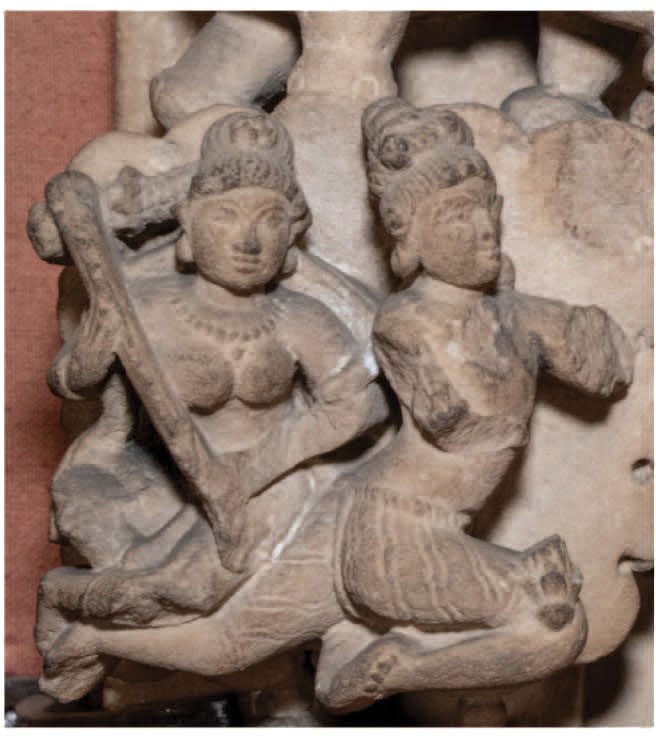
Neminatha is presented in the centre of the composition as the spiritual axis, seated on a bejeweled cushion. Carved in high relie£ the Jina has a lotus halo behind his head, elongated earlobes, shrivatsa ( chest jewel), ushnisha (topknot on the head), and trivali ( three lines around the neck). The Jina is flanked by chauri-bearers on each side standing in perpetual attendance. Above these are mithuna couples (male-female figures) floating on clouds, playing musical instruments, lending a sense of celebration to this scene. These figures embody fertility and auspiciousness for the followers of Jainism. The top section of this sculptural composition features a drumbeater seated amidst a lustration scene, symbolising prosperity and reverence for the Jina. Unlike the conventional depiction, the elephants appear adorned with howdahs and elaborate decorative harnesses complete with elephant drivers, evoking a more regal, processional presence than a purely symbolic one.