Mahavira-The 24th Jain Tirthankara
1940s CE, Gujranwala, Pakistan
Artefact Details
Shri Mahavira, named Vardhamana at birth, was the 24th and final Tirthankara in the Jain tradition. Believed to have lived in the 6th century BCE, he was an elder contemporary of Gautama Buddha. Born to King Siddhartha of the Ikshvaku dynasty and Queen Trishala near present~ day Nalanda in Bihar, he belonged to the Naya clan, where his father held the tide of Gana-Mukhya ( clan chief). Mahavira is venerated for establishing the present~day Jain monastic order and for extending the reach of Jainism beyond central India into western and northwestern regions, including the Punjab.
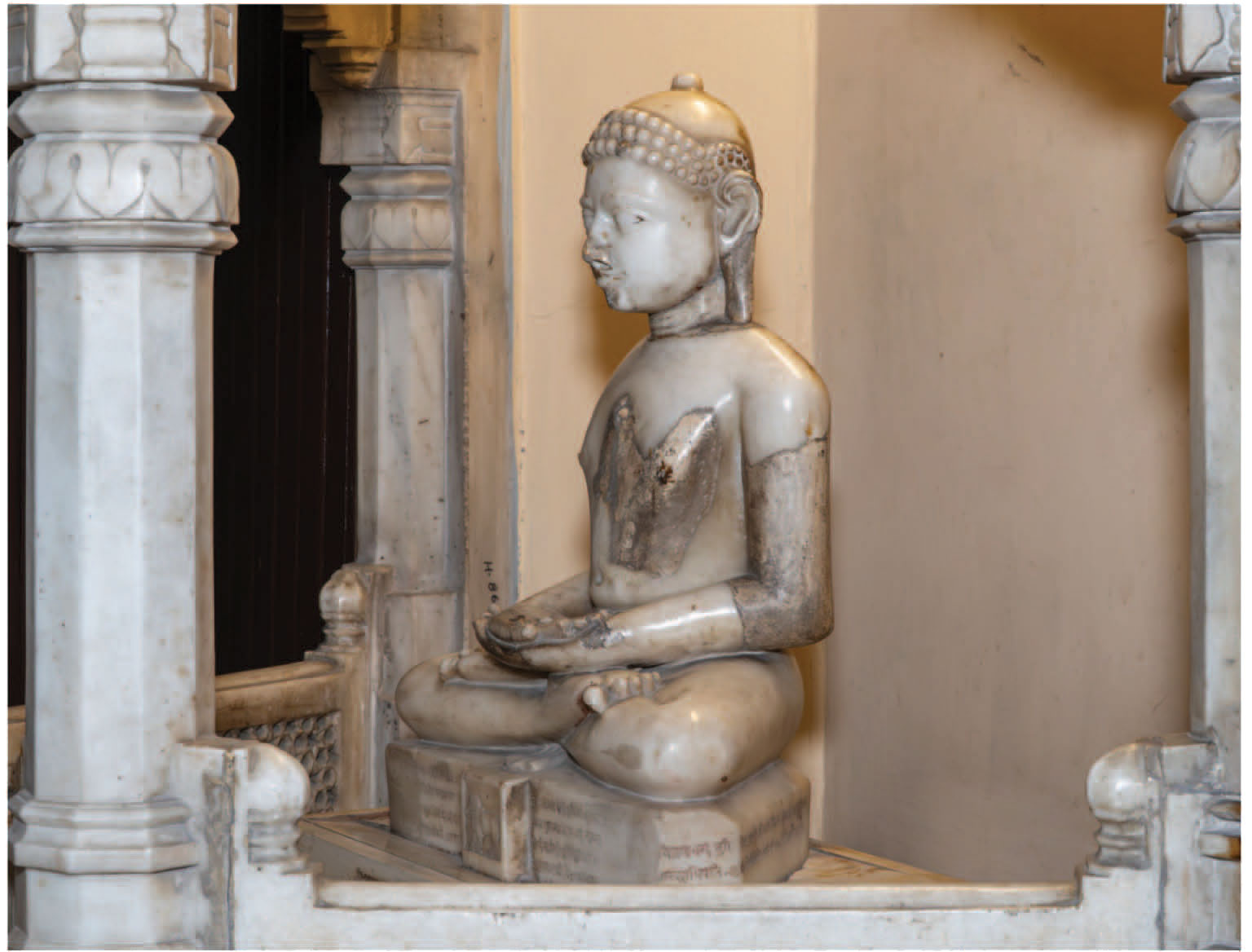
A three~line Devanagari inscription on the pedestal records the image's consecration in 1864 (VS 1921) by Shri Ratna Sagar Suri of the Achala~ gaccha order. The patron, Shah Keshavji Nayek, was a prominent Oswal Jain from Kothara, Kachchh, known for his philanthropic contributions, including temple construction and cultural endowments in Gujarat. The sculpture's original ritual function likely involved daily dravya-puja, a characteristic of the Achala Gaccha. This form of puja incorporates offerings such as sandalwood paste, incense, and fruit, in accordance with ashtaprakari puja (worship with eight objects).
Evidence of plaster restoration on the arms and torso indicate damage and subsequent conservation efforts. The presence of residual pigment suggests that the sculpture was actively used during rituals rather than serving solely as an object of visual contemplation.