Funerary Chhatri (Pavillion) of the Jain Monk Shri Atmaram
1904-1908 CE, Shri Atmaram's Samadhi, Gujranwala, Pakistan
Artefact Details
This white marble chhatri was originally housed within the samadhi (funerary monument) of the Jain Acharya Vijay Anand Suri of Gujran~ wala, also known as Shri Atmaram. It contains a marble slab carved with votive footprints representing Shri Atmaram and three of his eminent predecessors and teachers. Western scholarship refers to these footprints as padukas which stems from the Sanskrit word 'pada' meaning foot, but they are better referred to as charan-chinh: charan meaning foot, and chinh meaning sacred impression. While the footprints honour four revered Jain figures, the samadhi likely only commemorates Shri Atmaram, making this a monument of personal devotion and remembrance.
Funerary Chhatri (Pavillion) of the Jain Monk Shri Atmaram (English)
Funerary Chhatri (Pavillion) of the Jain Monk Shri Atmaram (Urdu)
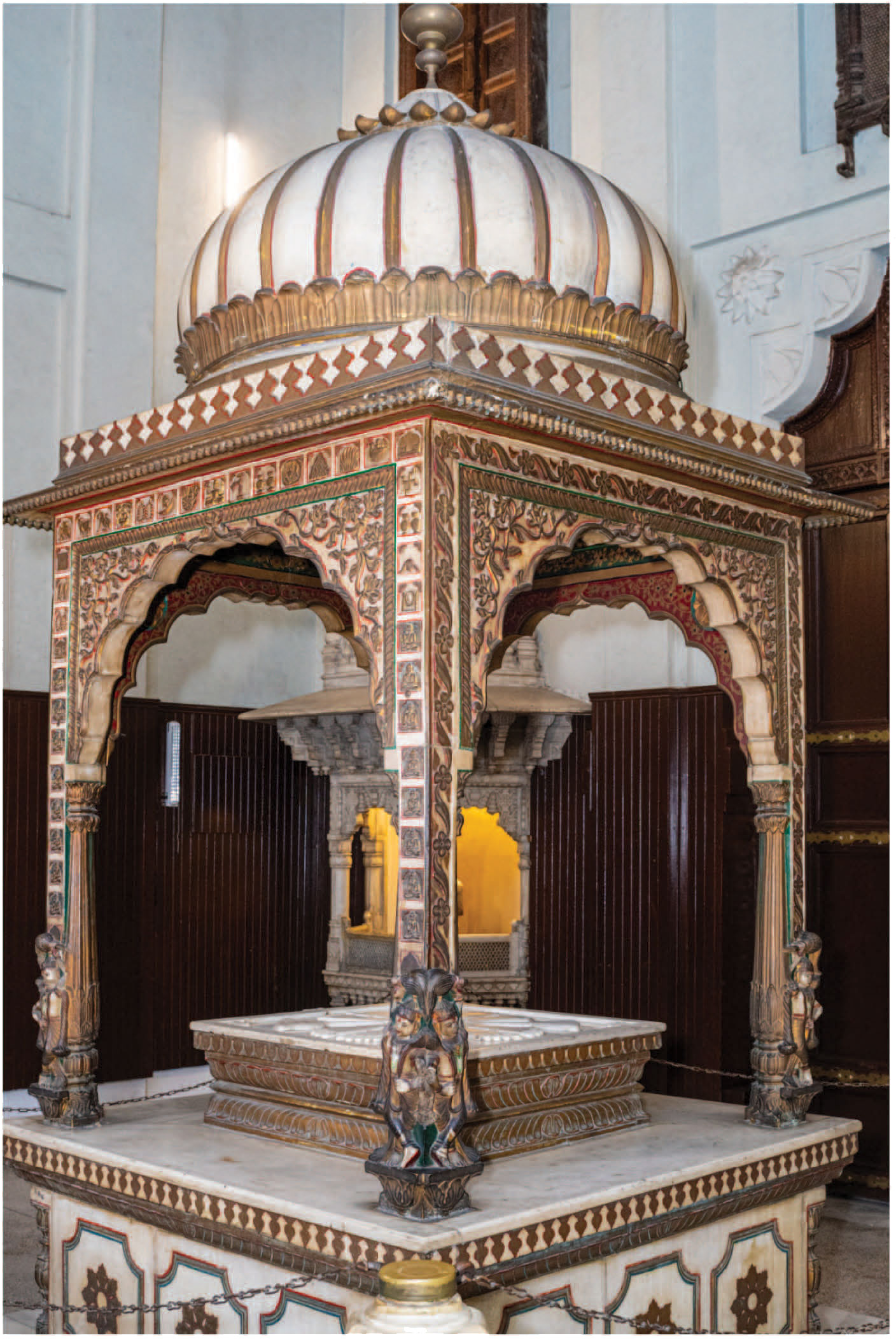
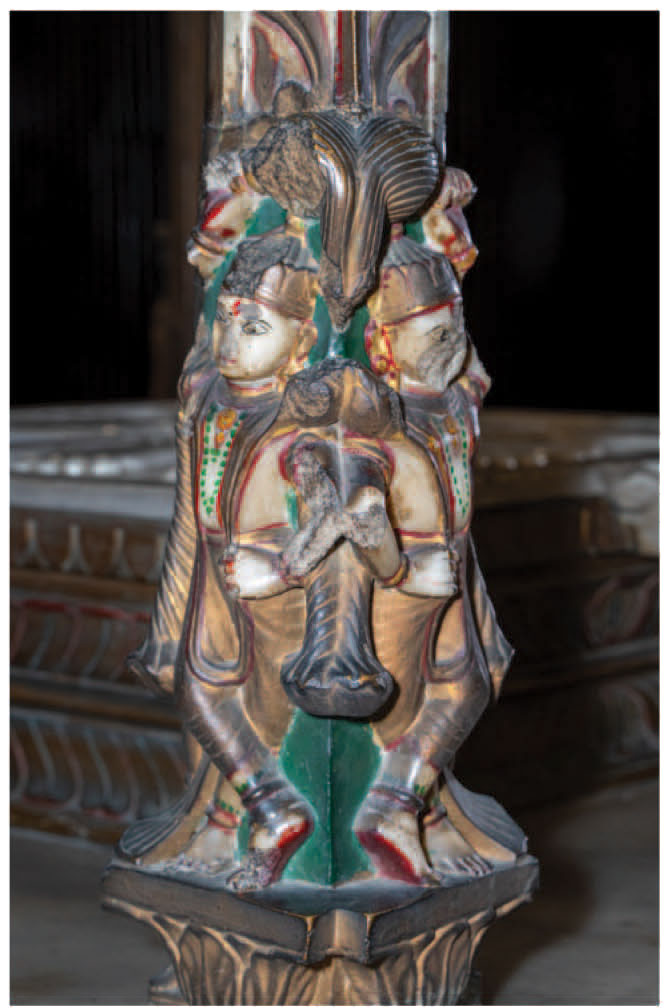
Chhatris were traditionally erected in honour of the Rajput royalty; this custom was adopted by the Sikhs and other non~ Muslim religious communities in South Asia. While traditional funerary chhatris house an urn~like marble lotus generally carrying a handful of the deceased's ashes, this chhatri holds a marble plaque showcasing charan-chinh of four important Jain monks, including those of Shri Atmaram. The structure rests on a square plinth and is supported by four tapering segmented pillars that uphold multi~foiled arches. A flat band on the exterior of the chhatri frames each arch on three sides running parallel to the pillars, as well as along the horizontal axis on top of the arch. This band carries a variety of decorative elements on the chhatri's facade. Two addorsed yaksha chauri~bearers ( male nature spirits holding flywhisks) stand at the quoins of this band at the base of each pillar offering perpetual veneration to the charan-chinh. Crowning the chhatri is a segmented dome topped with an inverted lotus finial, a motif repeated throughout the structure as a symbol of spiritual purity. Inside, the soffit features geometric and floral designs and is lavishly painted in green, red, and gold.
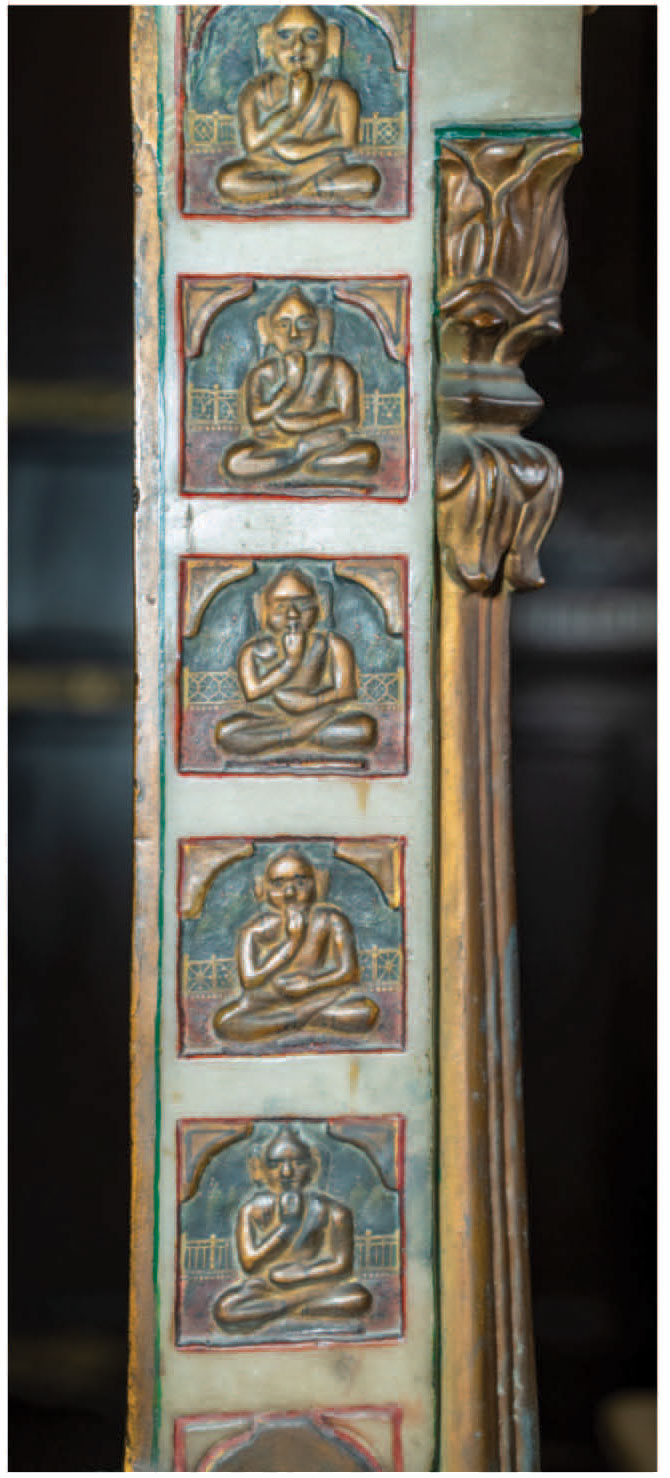
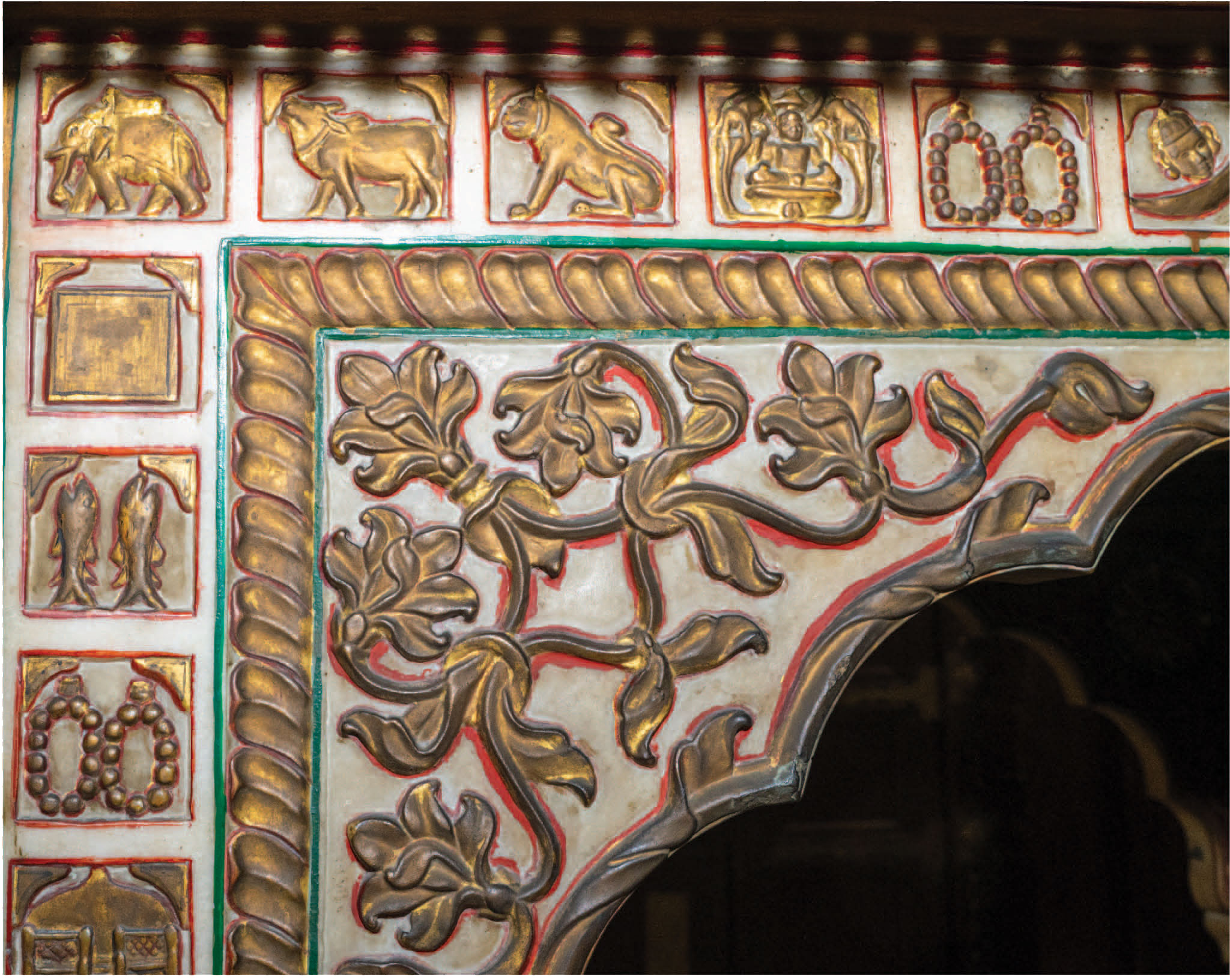
The symbolically rich facade features 39 carved squares ( each measuring 2 x 2 inches) depicting 16 depict monks with their hands on their mouths, indicating the maun-vrat or their eternal vow of silence, 8 ashtamangalas ( auspicious Jain symbols), and the 14 auspicious emblems seen in dreams by mothers of Tirthankaras, foretelling the birth of a great soul ( see pages 16-17).
These objects echo their stories across epochs. The parasol is itself a pan~Indic symbol of reverence spanningJain, Buddhist, Hindu, Sikh, and Islamic traditions. The devotional creation of such monuments by master craftsmen represents the pinnacle of their artistry and faith. They immortalise both the memory of revered teachers and the continuity of sacred traditions. Part time~capsule, part monument, they bear witness to the intimate devotion of their makers and the communities they served. They embody a shared vocabulary that continues to whisper today, to those willing to listen.
Ashtamangala and Dream Symbols
One of the most distinctive features of the chhatri is the carved and gold~painted border on the fa-;:ade, composed of thirty~nine, 2 x 2~inch squares. Sixteen of these squares depict monks with their hands on their mouths, indicating their eternal vow of silence, maun-vrat. The squares also present the eight auspicious Jain symbols, or ashtamangala: the nandyavarta (stylised swastika), matsya-yugma (pair of fish),jodi mala (pair of garlands), bhadrasana ( throne), svastik, kalasha (pot), chauri (flywhisk), and darpana (mirror), representing prosperity, purity, and spiritual attainment. Last but not least, fourteen dream emblems represent the chaturdash sapna seen in dreams by mothers of Tirthankaras, heralding the birth of a great soul (for details of the fourteen symbols see pages 16-17). Finally, a square at the centre of the composition depicts Lakshmi. Together, these symbols transform the chhatri from a simple funerary monument into a sacred site rich with Jain historical memory and ritual significance.