Charan-chinh or Padukas of the Jain Monk Udyota VijayaJi
1924 CE, Lahore, Pakistan
Artefact Details
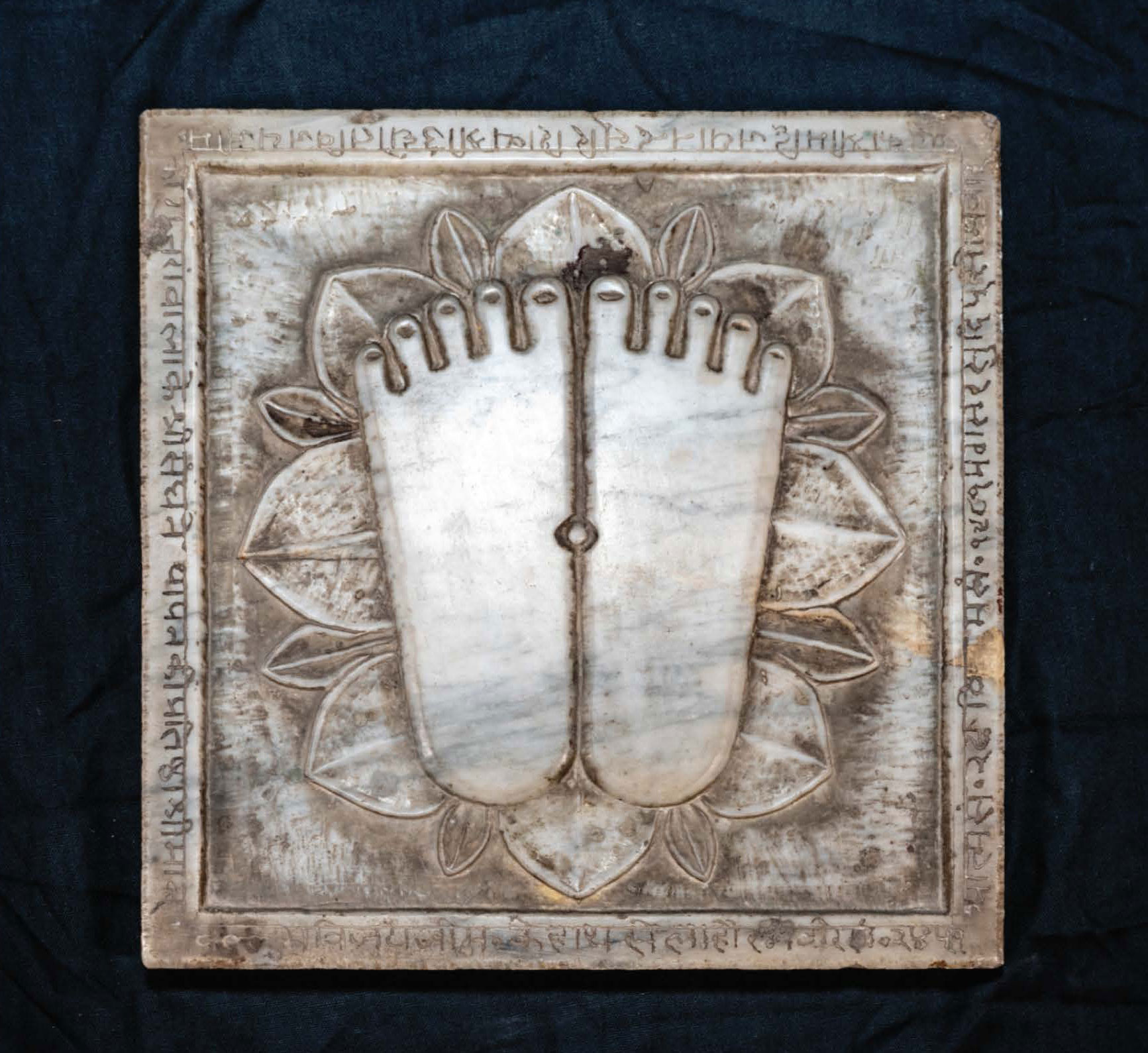
These white marble charan-chinh are symmetrically carved onto a square slab set within the form of an eight-petalled lotus, a powerful symbol of purity in Indic traditions. Emerging unstained from muddy waters, the lotus represents spiritual transcendence and the aspirant's path towards liberation. An inscription in the Devanagari script running along the border of the slab identifies these footprints as those of Jain monk Udyota Vijaya ji, a devoted disciple of Shri Atmaram. With his birth name Manak Rishi, Udyota VijayaJi was originally a scribe before he renounced his worldly life in 1878 (VS 1935) when Shri Atmaram initiated him into monasticism. His main upashraya (monastic residence) was in Ambala. According to the inscription, the charan-chinh was consecrated in Lahore in 1924, predating the construction of Lahore's Jain Mandir near Anarkali Bazaar in 1942. This suggests that they were likely housed in an earlier Jain shrine in the city associated with the Bhabra community.