Charan-chinh or Padukas of Shri Atmaram
1908 CE, Shri Atmaram's Samadhi, Gujranwala, Pakistan
Artefact Details
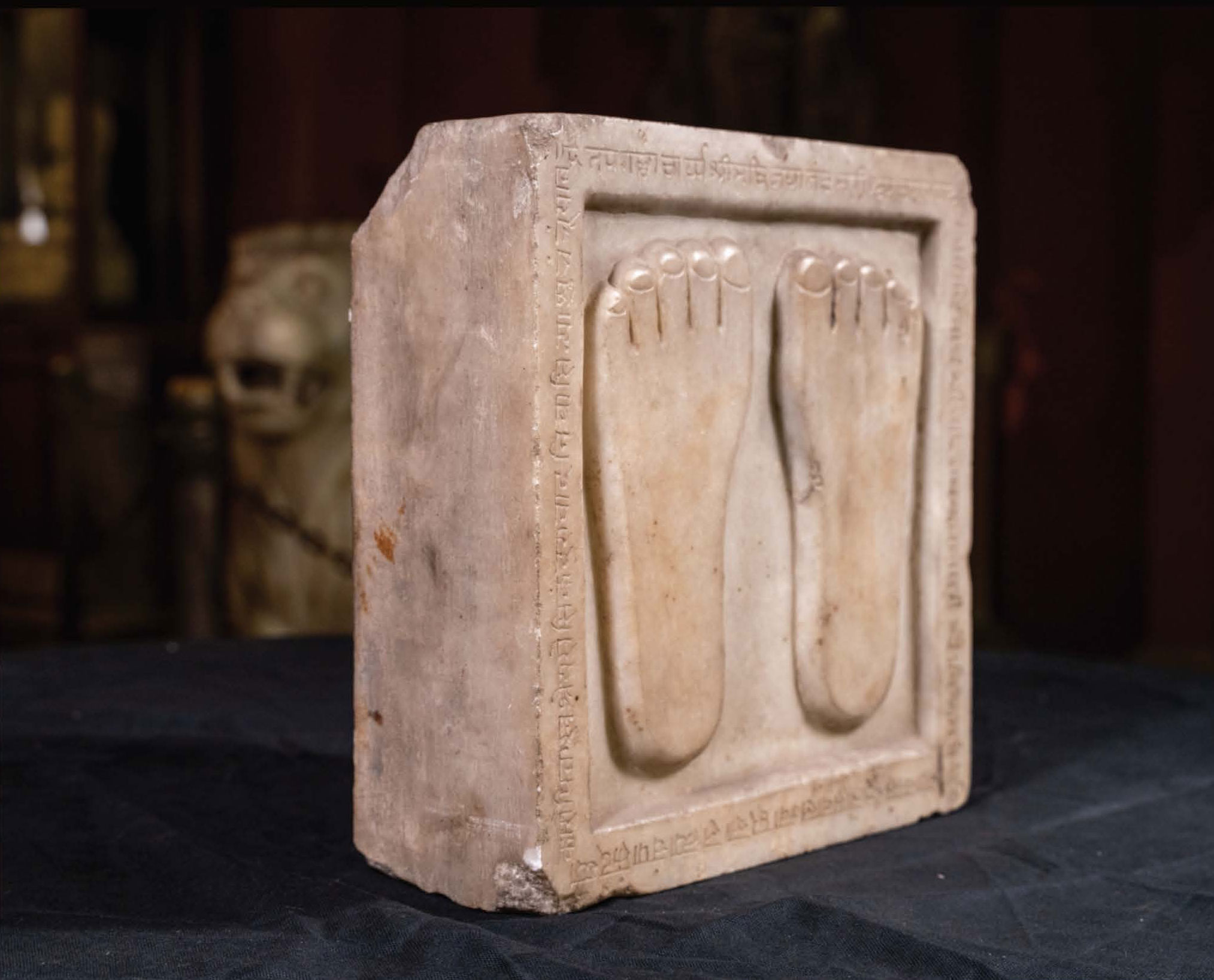
Similar to another specimen in the collection and likely consecrated alongside it, these white marble charan-chinh serve as a sacred representation of Shri Atmaram's footprints. Carved as an image of his feet complete with toenails, and not the print of the soles, they are framed by an inscription in the Devanagari script on the border along all four sides. The absence of a lotus, a usual symbol for such votive objects, is conspicuous. Originally housed in Shri Atmaram's Samadhi complex in Gujranwala, this charan-chint, slab was commissioned by Champa Sundari, wife of the Oswal merchant Jawaharlal of Sikandarabad. The inscription notes that these were consecrated by Shri Vijaya Kamal Suri in 1908 (VS 1965), on the 6th lunar day of the bright half of the month of Vaisakha (April). This object offers rare insight into the devotional agency of Jain laywomen and their role in temple patronage and ritual expression. A notable aspect of this specimen is the absence of a drainage spout or funnel. Commonly seen in charan-chinh used for charan-puja, where devotees apply sandalwood paste to the footprints and pour milk or water, the spout channels the liquid away. The lack of such a feature here suggests this charan-chinh functioned more as a symbolic icon of presence and reverence, rather than an object used in elaborate rites.