Charan-chinh or Padukas of Shri Atmaram
1908 CE, Shri Atmaram's Samadhi, Gujranwala, Pakistan
Artefact Details
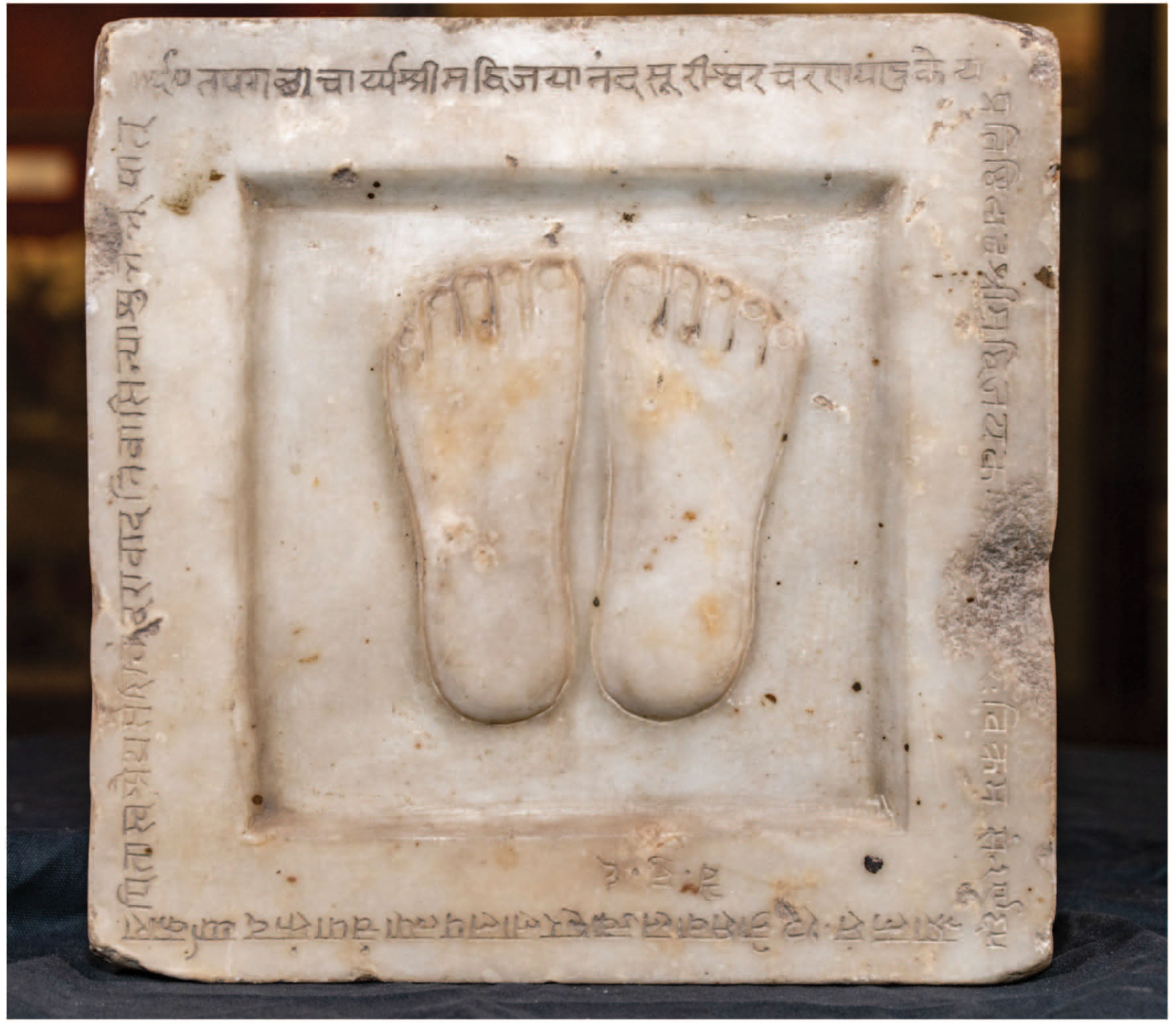
These white marble charan-chinh, or padukas, were likely housed inside a domed niche within the samadhi complex of Shri Atmaram, also known as Acharya Vijay Anand Suri, in Gujranwala. Used in ritual practices, charan-chinh slabs represent a special expression of devotion and inspira~ tion that is rooted in ancient socio~cultural practices where the feet of a holy person, or an elder, are touched to show respect and humility. A Sanskrit inscription carved around the border states that these were made to honour the 90th acharya of the Tapa Gaccha lineage ( referring Shri Atmaram), and that they were installed in 1908 (VS 1965) by Champa Sundari, wife of the Oswal merchant Jawaharlal of Sikandara~ bad from Uttar Pradesh, India. Housed in the Lahore Museum, this artefact depicts a bird's~eye view of Shri Atmaram's feet complete with toenails and offers the worshippers a life~like experience of touching the actual feet of the holy man and not just the impressions of their soles left in the stone plaque. This footprint plaque is unadorned. Even the lotus, the most common symbol used in this pedal ritual known as charan-kamal, is missing here, probably emphasising one of Jainism's core tenets of aparigraha, or non~possession.