Charan--chinh or Padukas (Footprints) of Four Jain Monks
1908 CE, Shri Atmaram's Samadhi, Gujranwala, Pakistan
Artefact Details
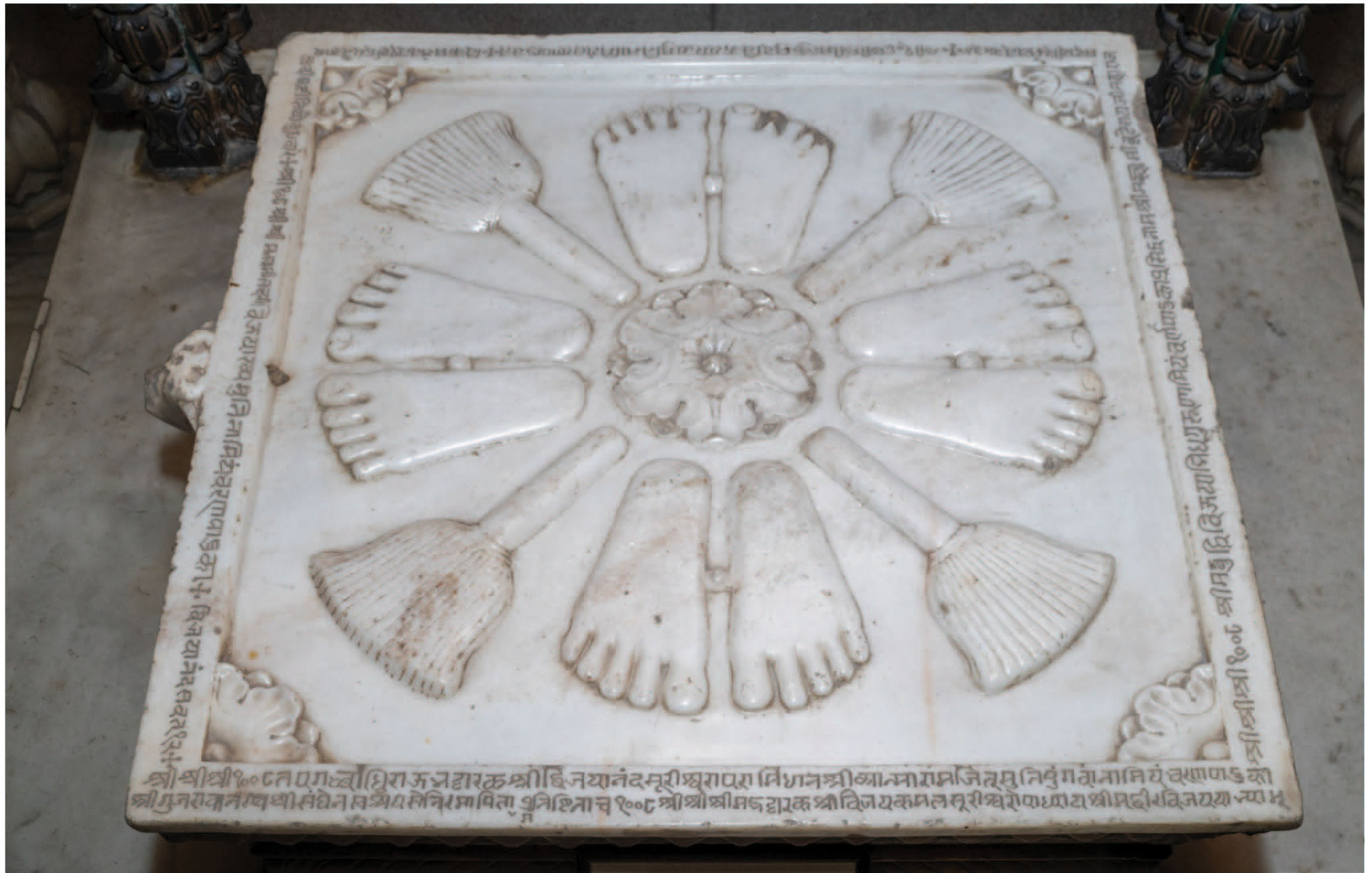
This unique white marble slab carrying footprints, or charan-chinh of four Jain monks, is a rare and significant example of Jain devotional practice, making its presence in the Lahore Museum especially noteworthy. Housed within the white marble chhatri from Shri Atmaram's samadhi, the square slab carries an inscription in Sanskrit on the border on all four sides. The inscriptions reveal that the footprints represent Shri Kumud Vijaya, Lakshmi VijayaJi and Buddhi VijayaJi Maharaj, in addition to Shri Atmaram.
Each pair of footprints is separated by a chauri (flywhisk), which is an ancient Indic symbol of royal protocol, and here it offers the same reverence to these four monks. In Jain tradition, charan-chinh serve as both a trace of earthly presence and a symbol of the spiritual path traversed by enlightened souls. Venerating them becomes an act of humility, devotion, and aspiration, transforming the feet, often seen as impure, into sacred emblems of liberation. One side of the slab features a bull~headed spout, used as a drain during charan-puja rituals involving offerings of milk and sandalwood paste. The bull is an important symbol in Jainism because of its association with Rishabh~ dev, the first Tirthankara.