Chandraprabhu-The 8th Jain Tirthankara
1864 CE, Gujranwala, Pakistan
Artefact Details
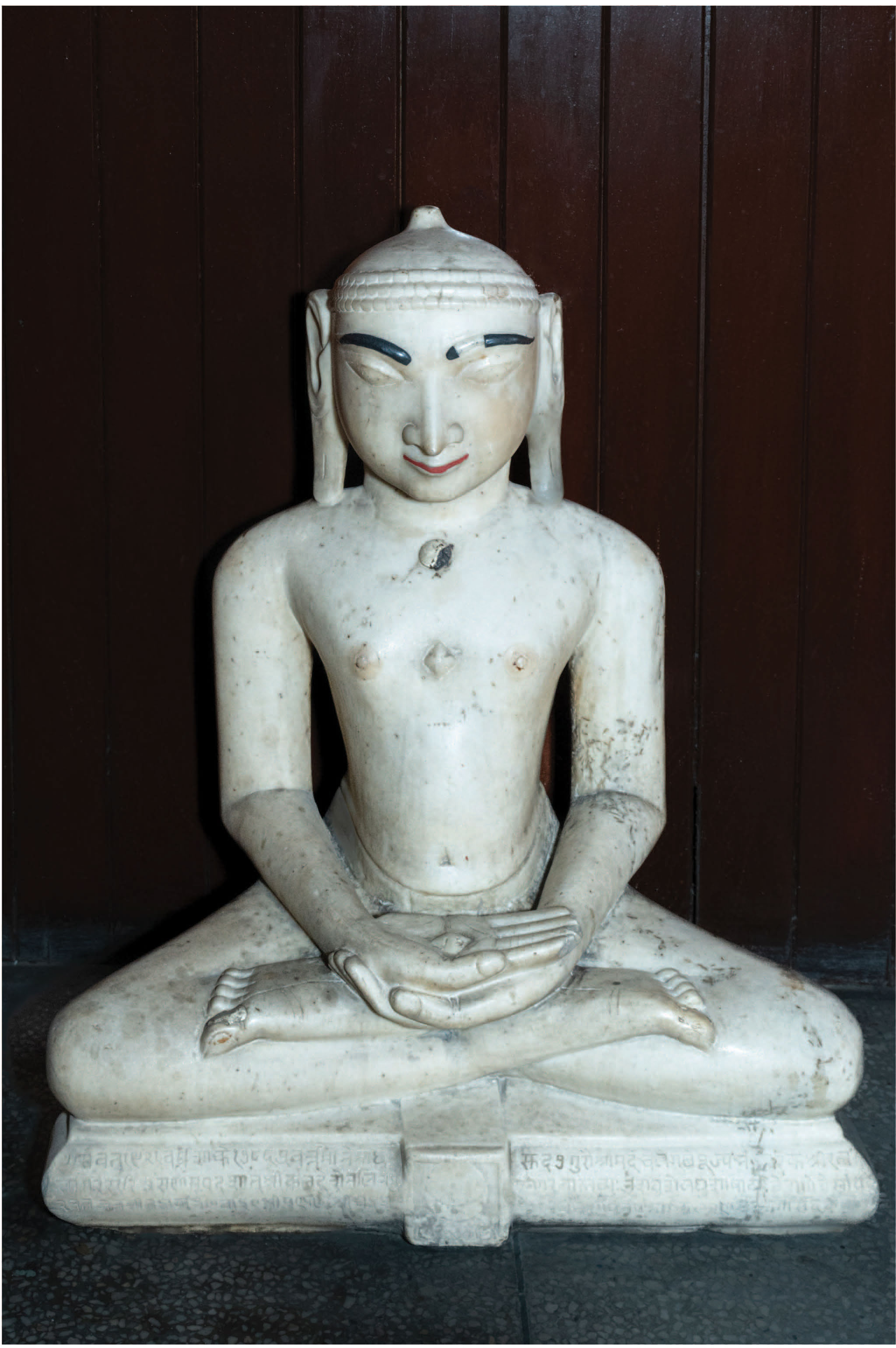
Chandraprabhu, the 8th Jain Tirthankara, is depicted here as an embodiment of silence and serene stillness, a characteristic feature of Jinas when they achieve moksha and are beyond all passion. The crescent moon symbol, his lakshana, is carved at the centre of the pedestal he sits upon. Chandraprabhu, meaning"moonlight;' reflects his auspicious birth. According to the 9th century Jain text Uttar Purana, Indra the Hindu deity is said to have named him because upon his birth, the earth shone like the moon and night~lotuses bloomed everywhere.
This Jina is shown sitting in the padmasana pose with hands in his lap indicating dhyana-mudra. The sculpture bears hallmarks of typical Jina iconography such as the ushnisha (the top knot), elongated earlobes, and the shrivatsa ( chest jewel). A waistband confirms that this sculpture would have been installed in a Shvetambara temple. Key points on the Jina's body are discoloured probably due to the application of saffron and sandalwood paste during ritual ceremonies once performed on this sculpture. The figure bears strong similarities to the sculpture of Dharmanatha in the collection, sharing details like life~like eyebrows rendered in relief in black stone, painted lips, and resin traces in the navel.
A Devanagari inscription at the base dates the consecration of the sculpture in 1864 (VS 1921) in Kachchh, Gujarat. Commissioned by Nenabai belonging to the Oswal merchant community, this sculpture offers insight into the devotional roles of Jain laywomen and the Shvetam~ bara patronage traditions of 19th~century colonial Gujarat. Given the similarity in stylistic features and the dates of consecration, it is reasonable to attribute this sculpture and the sculpture of Dharmanatha to the same workshop. According to a 1936 publication on Shri Atmaram's Centenary Commemoration, these sculptures were brought by Shri Atmaram during his journey from Gujarat to the Punjab.